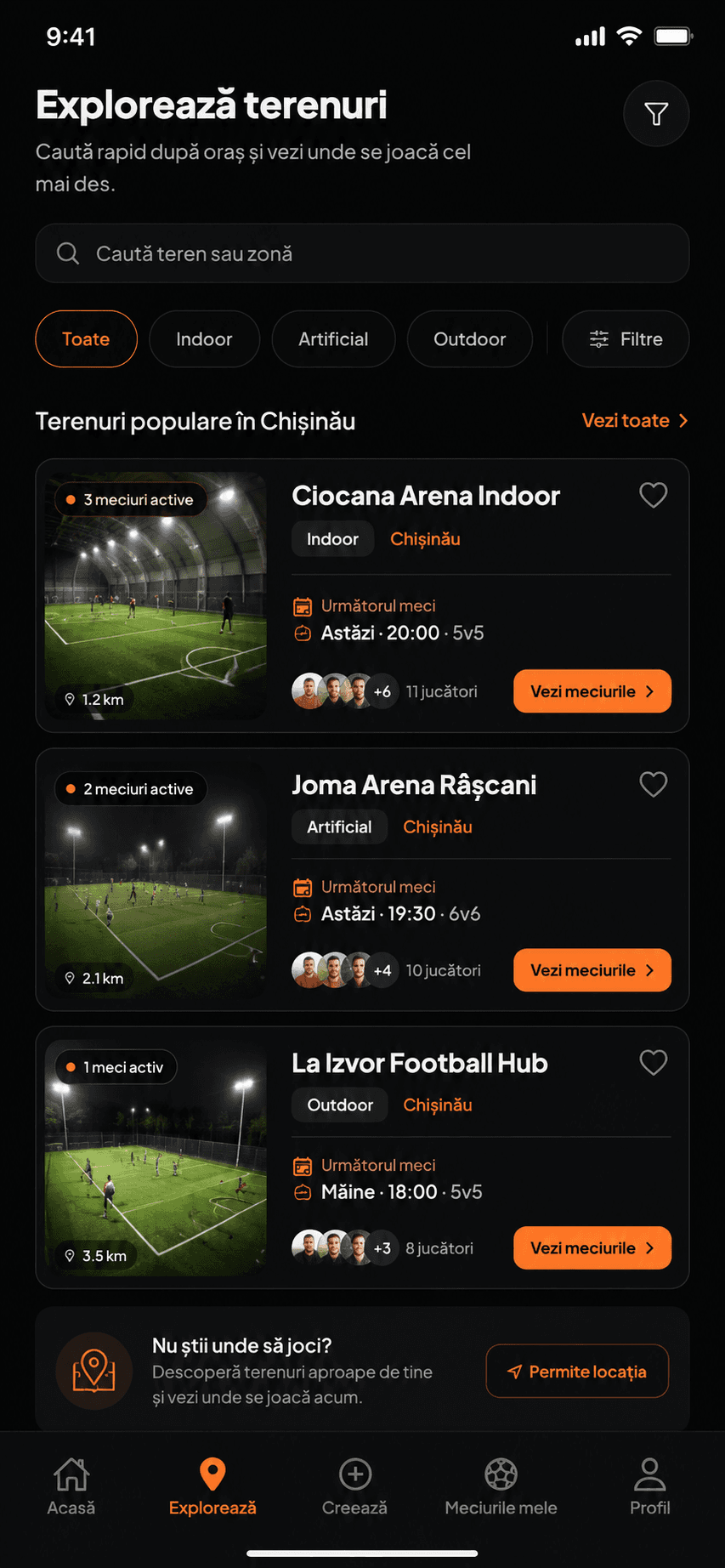
Place matters first
Players need to see active fields and local travel context before evaluating a match.

Vreau să Joc is a local football product I designed and built in 2026. The working MVP helps players find an open match, join the right squad, and organize the next game without chat-group friction.
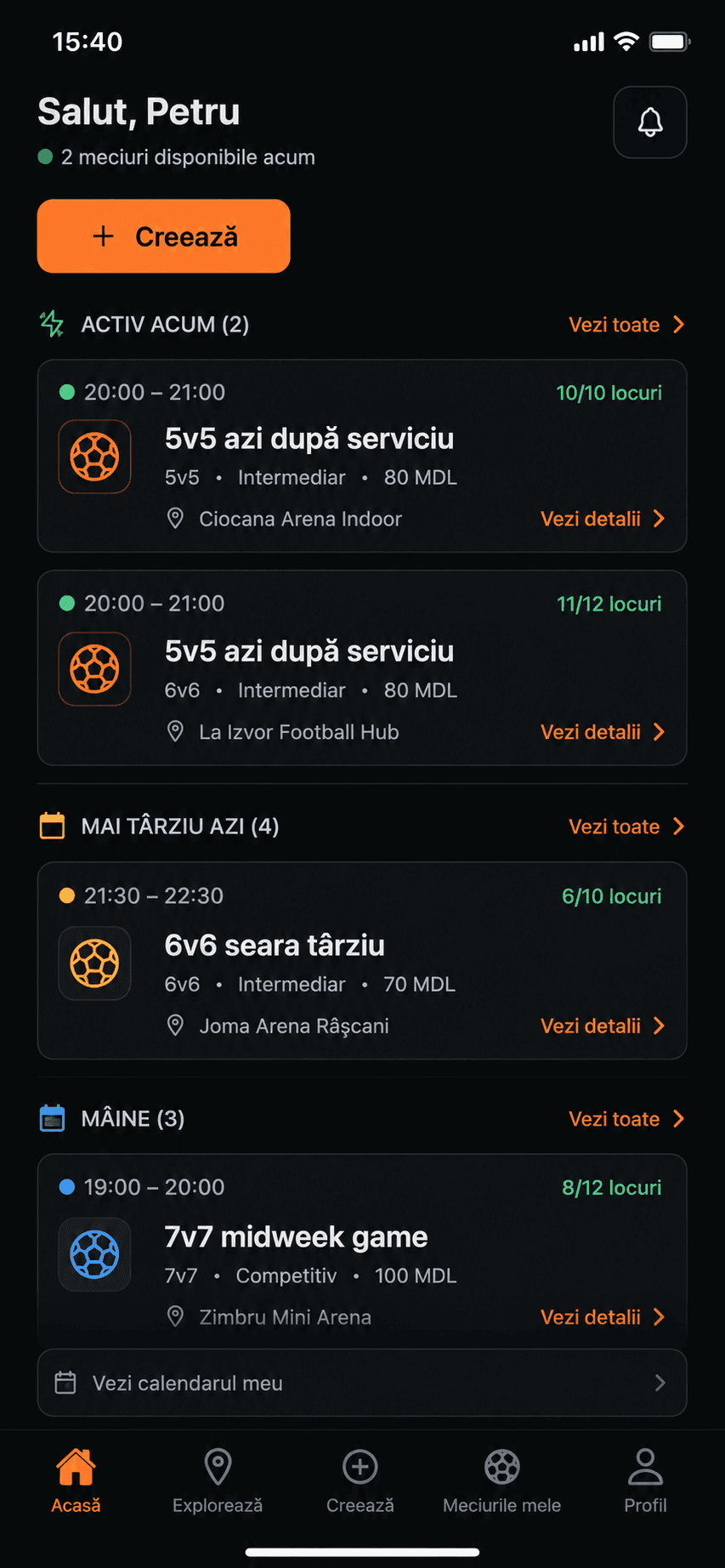
Amateur matches are often coordinated through scattered messages: where, when, how much, what level, and whether a place is still open. I shaped the MVP around one decision—can I confidently join this game now?—then made organizing the alternative when no suitable match exists.
Players need to see active fields and local travel context before evaluating a match.
Remaining places, format, and level determine whether a player can act with confidence.
If no match fits, publishing one should feel closer to posting an event than completing a form.
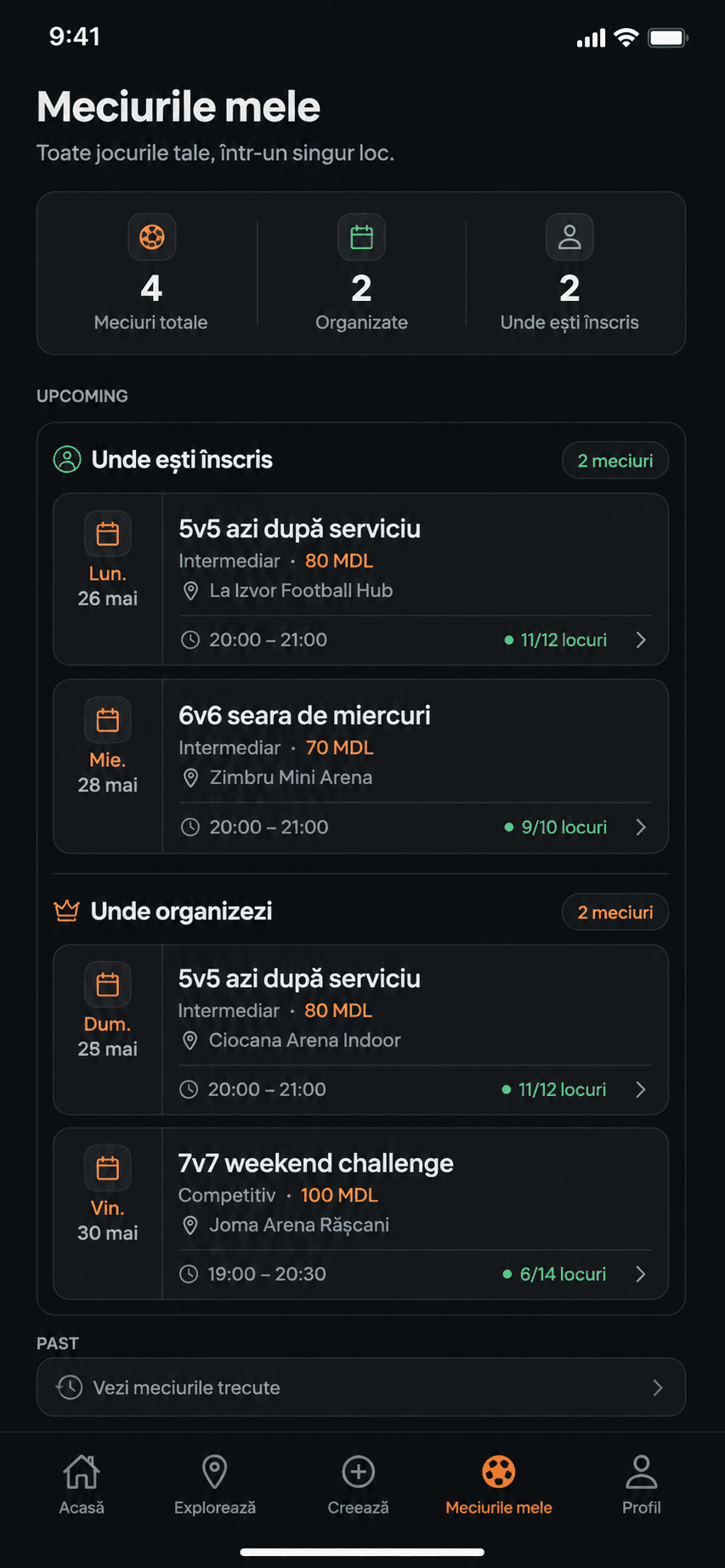
Four surfaces carry the main coordination loop. The Romanian screens below show the product’s visual direction; the corresponding product structure and flows are implemented in the working MVP.
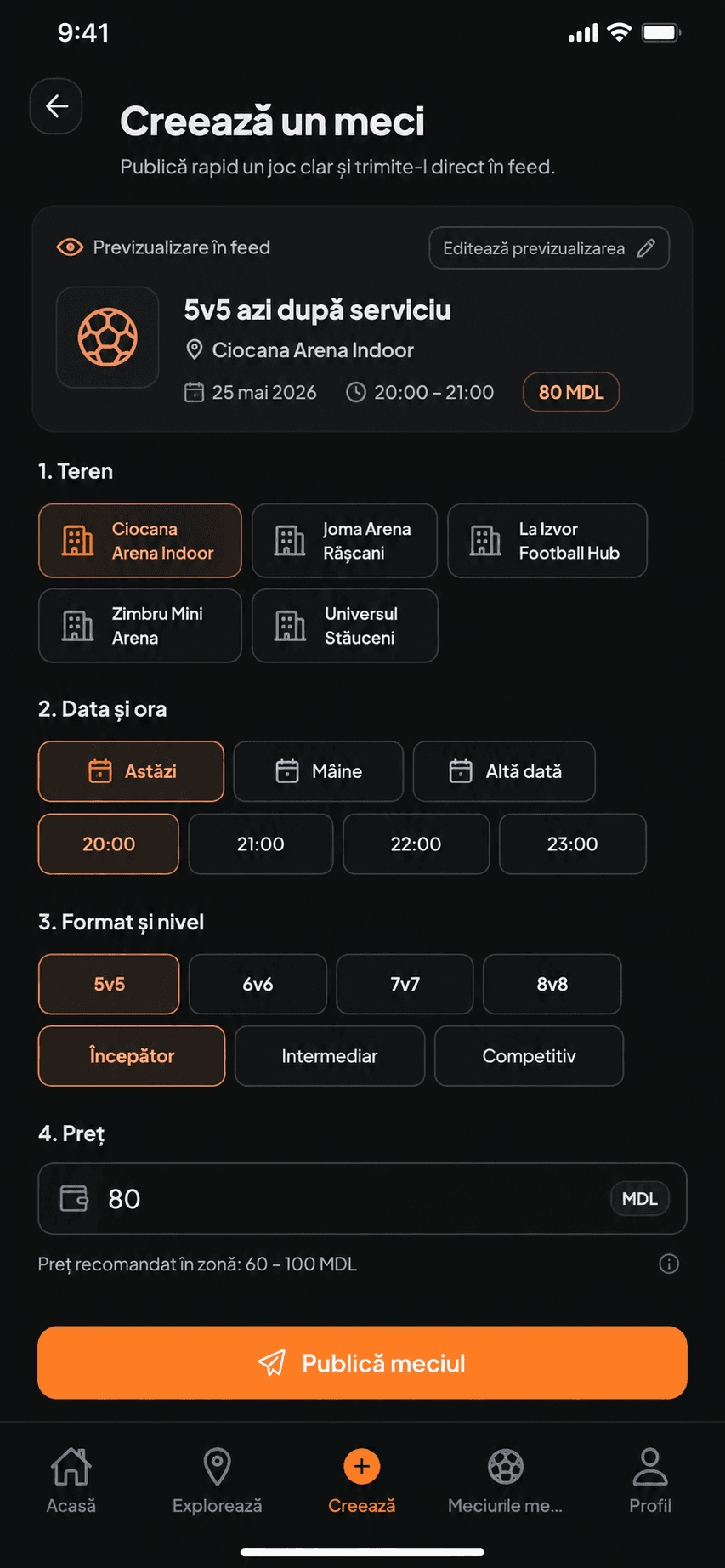
The creation flow keeps a feed preview visible before the controls. Field, time, format, level, and price then follow the same order a player uses to judge the published match.
Quick choices keep typing to a minimum. After publishing, the player returns to the feed with the same hierarchy and a clear view of the new match.
The interface is backed by four connected entities. This keeps discovery, capacity, ownership, and participation synchronized without introducing teams or permanent rosters into the MVP.
The feed prioritizes urgency, open spots, and start time so the next action is visible before supporting detail.
A field is more than an address. It groups local activity and provides a direct route to its scheduled matches.
Player position, skill level, match history, and reliability create context before someone joins a squad.
Built with Expo, React Native, and Supabase for iOS, Android, and web, the MVP includes email sign-in, player profiles, match discovery, participation, and organizer controls.
Romanian, English, and Russian copy support the local audience. Saved data, recoverable errors, and clear loading states support the journey beyond the polished screens.
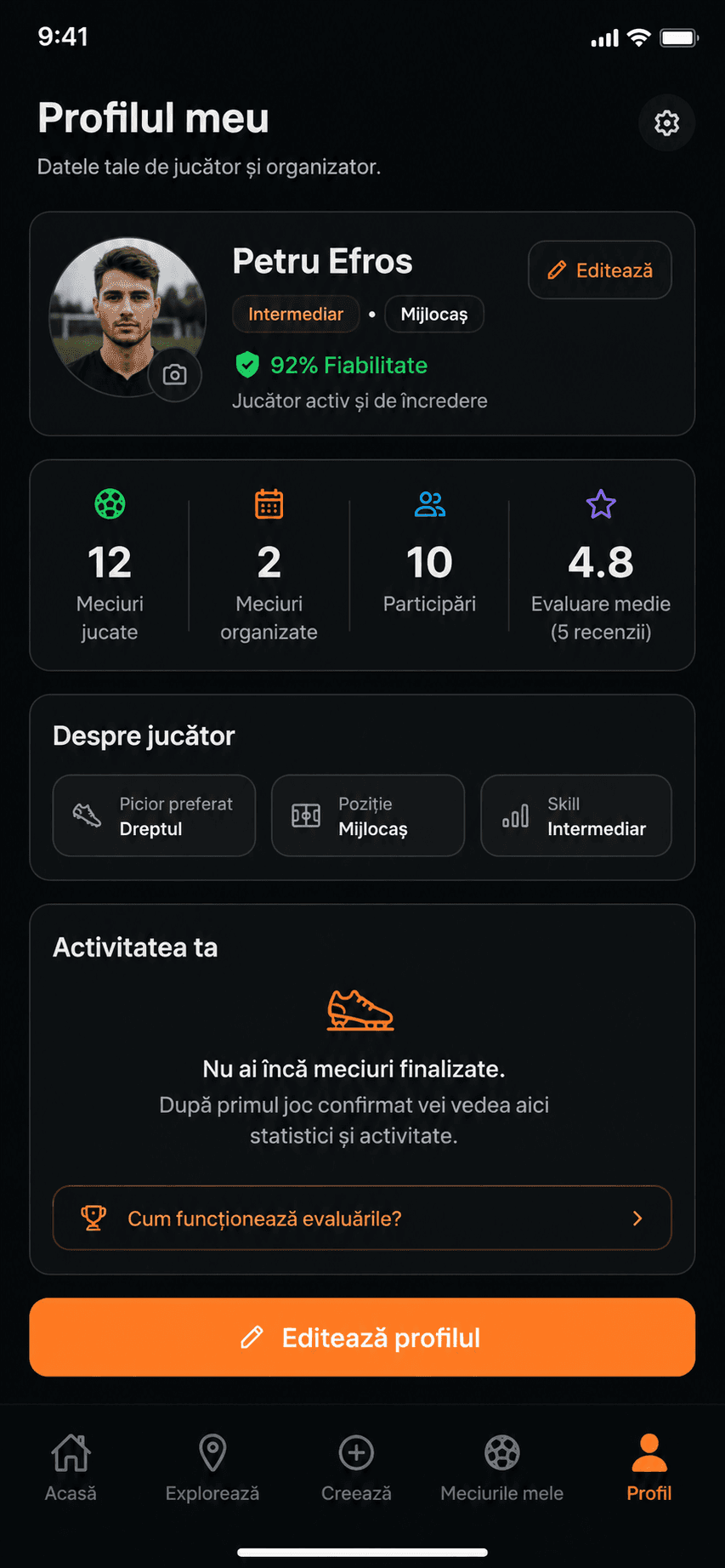
A player needs confidence that a place is available. An organizer needs control of the squad. The MVP makes those responsibilities visible before adding more social features.
Next, I would test whether players can choose a suitable match quickly and whether organizers understand capacity without explanation. A consistent sign-in flow and simple match updates come before more social features or push notifications.
This is a self-initiated working MVP. Behavior claims reflect the current source implementation. The polished Romanian screens document the intended visual direction; the project does not yet claim public adoption, formal usability validation, or measured marketplace outcomes.
Next experimentAI Usage